
Auto-Off-Manual selector switches offer versatile control, enabling selection between automated, disabled, and direct user operation of various systems and equipment.
What is a Selector Switch?
A selector switch is a crucial electromechanical component designed to manage electrical circuits and navigate between distinct operational modes. Unlike simple on/off switches, these devices provide multiple positions, allowing for greater control and flexibility. Commonly, these positions are labeled as Manual, Off, and Auto, or numerically as 1, 0, and 2.
These switches aren’t merely for activation or deactivation; they facilitate choosing between different functionalities – for instance, Auto versus Manual control, or selecting a primary versus secondary power source. Their design prioritizes clarity, ensuring users can easily identify the current operational state. A typical application involves a knob used to select the desired function or setting.
The Core Function: Selecting Operational Modes
The fundamental purpose of an Auto-Off-Manual selector switch is to empower users to choose how a system operates; This selection dictates whether the system runs autonomously (Auto), is completely deactivated (Off), or is directly controlled by a human operator (Manual). This capability is vital in scenarios demanding adaptability and safety.
These switches excel at providing clear differentiation between operational states. Examples include transitioning between automated and manual control, or choosing between different power sources. They are designed for intuitive operation, allowing for quick and decisive mode changes. The switch’s position visually communicates the current operating status, enhancing situational awareness and preventing errors.

Understanding the Positions: Auto, Off, and Manual
Auto-Off-Manual positions define operational control: Auto for automated function, Off for complete disablement, and Manual for direct user intervention.
The ‘Auto’ Position: Automated Operation
When the selector switch is placed in the ‘Auto’ position, the connected system transitions to a self-governing operational state. This means the system operates independently, following pre-programmed instructions or responding to sensor inputs without requiring continuous user intervention. The system’s internal logic dictates its behavior, managing functions like starting, stopping, and adjusting parameters based on defined criteria.
This automated mode is ideal for processes requiring consistent performance or complex sequences, freeing operators from repetitive tasks. It enhances efficiency and reduces the potential for human error. However, it’s crucial to ensure the automated system is properly configured and monitored to prevent unexpected behavior or safety concerns. The ‘Auto’ position signifies a shift from direct control to a pre-defined, intelligent operation.
The ‘Off’ Position: Complete Disablement
Selecting the ‘Off’ position on an auto-off-manual selector switch ensures a complete cessation of power and functionality to the connected system. This is a critical safety feature, providing a definitive method to halt operation in emergency situations or during maintenance procedures. Unlike simply disconnecting power, the selector switch’s ‘Off’ position offers a clear and intentional shutdown, minimizing the risk of accidental reactivation;
In this state, all circuits are broken, preventing any electrical flow and guaranteeing the system remains inactive. This is paramount for preventing damage, ensuring personnel safety, and facilitating repairs. The ‘Off’ position represents a secure and reliable method for total system deactivation, offering peace of mind and a controlled shutdown process.
The ‘Manual’ Position: Direct User Control
The ‘Manual’ position on an auto-off-manual selector switch grants the operator complete, direct control over the connected system. This bypasses any automated sequences, allowing for precise and immediate adjustments based on real-time needs or specific operational requirements. Utilizing this setting demands operator skill and attentiveness, as all functions are directly managed by the user.
This mode is crucial for tasks requiring nuanced control, troubleshooting, or overriding automated processes. It’s often employed during initial setup, testing, or when dealing with non-standard conditions. The ‘Manual’ position provides a hands-on approach, empowering the operator to dictate the system’s behavior and respond dynamically to changing circumstances, ensuring optimal performance and safety.
Types of Auto-Off-Manual Selector Switches
Various selector switch types exist, including rotary, key-operated, and illuminated models, each offering unique features for control, security, and visual feedback.
Rotary Selector Switches: A Common Type
Rotary selector switches represent a frequently utilized design within the broader category of selector switches. Characterized by a rotating knob, these switches allow users to cycle through various operational settings with a simple turn. They are ideally suited for applications requiring the selection of multiple functions or settings within a single control point.
Typically, these switches feature distinct detents or indexing to provide tactile feedback, ensuring accurate position selection. The positions are commonly labeled as Manual, Off, and Auto, or numerically as 1, 0, and 2, offering clear indication of the selected mode. Their robust construction and straightforward operation make them a reliable choice for diverse industrial and commercial applications, providing a user-friendly interface for controlling complex systems.
Key-Operated Selector Switches: Security and Access Control
Key-operated selector switches introduce an added layer of security and controlled access to operational modes. Unlike standard rotary or push-button selectors, these require a specific key to enable or change settings, preventing unauthorized operation. This feature is particularly valuable in applications where preventing accidental or deliberate misuse is critical.
Commonly employed in machinery, vehicles, and security systems, key-operated switches ensure only authorized personnel can select modes like Manual, Off, or Auto. The key acts as a physical safeguard, restricting access to sensitive controls. This design minimizes the risk of unintended activation or tampering, enhancing safety and protecting valuable equipment. They are a robust solution for environments demanding heightened security protocols and controlled operational access.
Illuminated Selector Switches: Visual Feedback
Illuminated selector switches enhance usability and provide clear operational status at a glance. Integrating LEDs within the switch body, these components visually indicate the currently selected position – Auto, Off, or Manual – even in low-light conditions. This immediate visual feedback minimizes errors and streamlines operation, particularly in complex systems where multiple modes are available.
A complete illuminated selector switch incorporates the switch itself and integrated lighting elements. The illumination clarifies the selected mode, improving operator awareness and reducing the potential for misoperation. This is crucial in industrial settings, automotive applications, and control panels where quick and accurate mode identification is paramount. They offer a significant improvement in user experience and safety.

Applications of Auto-Off-Manual Selector Switches
These versatile switches find use in industrial machinery, automotive systems, and home appliances, offering control for diverse functions and operational modes.
Industrial Machinery Control
Auto-Off-Manual selector switches are crucial in industrial settings for controlling complex machinery. The ‘Auto’ position allows for automated production cycles, increasing efficiency and reducing human intervention. Selecting ‘Off’ provides a complete and safe shutdown for maintenance or emergencies.

The ‘Manual’ mode grants operators direct control, essential for precise adjustments, troubleshooting, or specialized tasks not suited for automation. These switches ensure clarity in operation, preventing accidental activation or incorrect settings. They are frequently used in applications requiring selection between different power sources or operational states, like choosing between automated and operator-driven conveyor systems or controlling pump operations.
Robust designs and durable materials are vital for withstanding harsh industrial environments, guaranteeing reliable performance and longevity.
Automotive Applications
Auto-Off-Manual selector switches find significant use within automotive systems, offering drivers control over various functions. A common application is in transfer cases for four-wheel-drive vehicles, allowing selection between 2WD (Off), 4WD High (Auto), and 4WD Low (Manual) modes, adapting to diverse driving conditions.
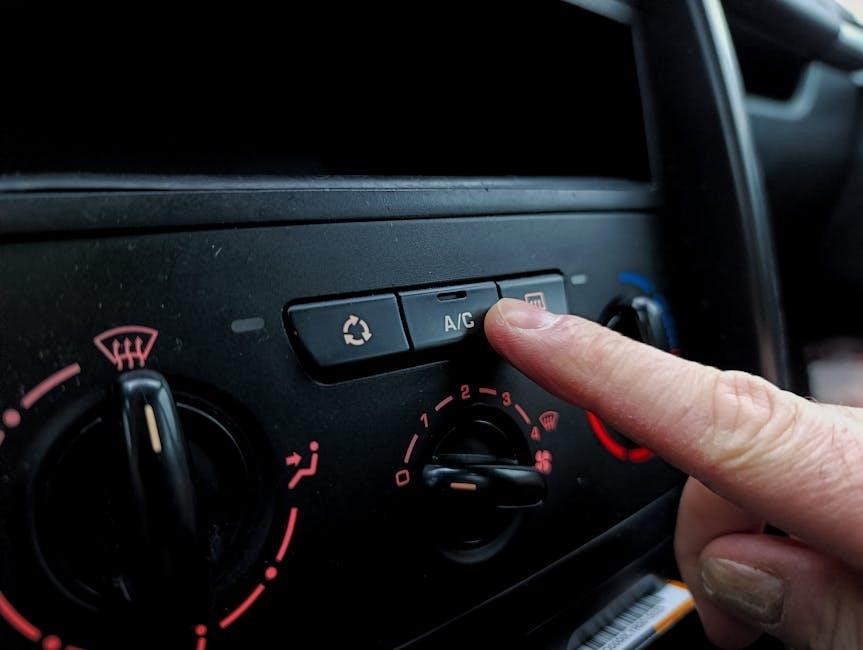
These switches also manage auxiliary systems, such as controlling different fan speeds or selecting between automatic and manual climate control settings. The ‘Auto’ position often optimizes performance based on sensor inputs, while ‘Manual’ provides direct user preference.
Durability and reliability are paramount in automotive environments, requiring switches capable of withstanding vibration, temperature fluctuations, and constant use.
Home Appliance Integration
Auto-Off-Manual selector switches are increasingly integrated into modern home appliances, enhancing user convenience and control. Washing machines often utilize these switches to select wash cycles – ‘Auto’ for pre-programmed settings, ‘Off’ for complete shutdown, and ‘Manual’ for customized control over water temperature and spin speed.
Dishwashers similarly benefit, allowing users to choose between automatic cleaning programs and manual adjustments. In HVAC systems, these switches can manage fan operation, selecting between automatic temperature regulation and continuous manual airflow.
The clarity of these switches is crucial for intuitive operation, ensuring users can easily select their desired settings within the home environment.

Technical Specifications and Considerations
Auto-Off-Manual selector switches require careful attention to voltage, current ratings, and durability, alongside features like stay-put mechanisms for reliable operation.
Voltage and Current Ratings
Auto-Off-Manual selector switches, like all electrical components, are defined by their voltage and current handling capabilities. These ratings are crucial for safe and reliable operation, preventing damage to both the switch itself and the connected circuitry. Selecting a switch with appropriate ratings is paramount; exceeding these limits can lead to overheating, arcing, and ultimately, switch failure.
Voltage ratings indicate the maximum voltage the switch can safely handle, while current ratings specify the maximum current it can conduct without experiencing excessive heat buildup. These values are typically clearly marked on the switch housing. It’s essential to consider not only the nominal operating voltage and current but also potential surge conditions that might temporarily exceed these values. Always consult the manufacturer’s datasheet for precise specifications and derating guidelines.
Stay-Put Mechanism Explained
Many Auto-Off-Manual selector switches incorporate a “stay-put” mechanism, a crucial feature for maintaining a selected position without requiring continuous operator pressure. This means once the switch is moved to Auto, Off, or Manual, it remains there until intentionally repositioned. This functionality is particularly important in applications where a clear and maintained operational mode is essential for safety and process control.
The stay-put mechanism typically utilizes detents or spring-loaded ball bearings that lock the switch into each defined position. This prevents accidental changes due to vibration or minor disturbances. Switches with this feature are often preferred in industrial settings and automotive applications, ensuring reliable operation and minimizing the risk of unintended system behavior. A long handle often accompanies this mechanism.
Durability and Environmental Factors
Auto-Off-Manual selector switches are often subjected to harsh operating conditions, demanding robust construction and resistance to environmental stressors. Durability is paramount, with switches needing to withstand repeated actuation over extended periods. Material selection plays a vital role; manufacturers commonly employ durable plastics and metals to ensure longevity.
Environmental factors like temperature fluctuations, humidity, dust, and vibration can significantly impact performance. Industrial-grade switches are frequently sealed to protect against ingress of contaminants. Consideration must be given to operating temperature ranges and resistance to corrosive substances. Selecting a switch rated for the specific environment ensures reliable operation and minimizes the risk of failure, contributing to overall system uptime and safety.

Wiring and Installation Best Practices
Proper installation of auto-off-manual selector switches requires careful attention to safety precautions and adherence to established wiring diagrams for reliable operation.
Safety Precautions During Installation
Prior to installing an auto-off-manual selector switch, always disconnect the power supply to prevent electrical shock. Verify the power is off using a reliable testing device. Ensure the work area is well-lit and free from obstructions. Use insulated tools specifically designed for electrical work to minimize risk;
Carefully review the switch’s datasheet for voltage and current limitations, and confirm compatibility with the circuit. Avoid installing the switch in damp or hazardous environments unless it’s appropriately sealed and rated for such conditions. Double-check all wiring connections before restoring power, ensuring correct polarity and secure terminations.
If unsure about any aspect of the installation, consult a qualified electrician. Improper installation can lead to equipment damage, fire hazards, or personal injury.
Common Wiring Diagrams
A typical auto-off-manual selector switch utilizes a Single Pole Double Throw (SPDT) or Double Pole Double Throw (DPDT) configuration. In a basic SPDT setup, the common terminal connects to either the ‘Auto’ or ‘Manual’ terminal depending on the switch position, with ‘Off’ disconnecting the circuit.
For DPDT switches, two separate circuits are controlled simultaneously. One set of contacts might activate an automated system in ‘Auto’ mode, while the other enables direct control in ‘Manual’. The ‘Off’ position disconnects both circuits.
Wiring often involves connecting the power source to the common terminal and the load to the selected mode terminals. Always refer to the switch’s specific datasheet for the correct terminal designations and recommended wiring practices. Proper grounding is crucial for safety and reliable operation.

Troubleshooting Common Issues
Selector switch problems often involve contact bounce or complete failure; testing continuity across terminals and checking for loose connections are vital diagnostic steps.
Switch Failure Diagnosis
Diagnosing failures in auto-off-manual selector switches requires a systematic approach. Initially, visually inspect the switch for physical damage – cracks, broken knobs, or loose components. A multimeter is crucial; check for continuity between terminals in each selected position. An open circuit indicates a broken internal connection.
Intermittent operation suggests contact bounce or worn contacts. If the switch fails to maintain a selected position (stay-put mechanism issue), examine the detent mechanism. Resistance measurements can reveal corroded or high-resistance contacts. Remember to disconnect power before any testing! Consider the switch’s age and operating environment; frequent use or harsh conditions accelerate wear. Replacement is often the most practical solution for irreparable damage.
Contact Bounce and Mitigation
Contact bounce is a common issue in auto-off-manual selector switches, where the internal contacts momentarily make and break connection upon operation. This creates spurious signals, potentially causing erratic behavior in connected circuits. The mechanical nature of the switch causes this, as inertia leads to contact oscillation.
Mitigation techniques include employing debouncing circuits – typically using capacitors and resistors – to filter out these brief signals. Software debouncing within the controlled system is another approach. High-quality switches with gold-plated contacts minimize bounce due to their superior conductivity and reduced oxidation. Selecting switches designed for frequent operation and incorporating a dampening mechanism within the switch itself can also significantly reduce contact bounce effects.

Future Trends in Selector Switch Technology
Selector switch evolution includes smart designs with digital interfaces and seamless IoT integration, offering remote control and data analytics capabilities.
Smart Selector Switches with Digital Interfaces
The integration of digital interfaces into auto-off-manual selector switches represents a significant advancement. These “smart” switches move beyond simple mechanical operation, incorporating features like LCD displays to clearly indicate the selected mode – Auto, Off, or Manual.
Digital communication protocols, such as Modbus or Ethernet, allow these switches to transmit status information and receive commands remotely. This enables integration into Building Management Systems (BMS) or Programmable Logic Controllers (PLCs) for centralized control and monitoring.
Furthermore, digital interfaces facilitate advanced functionalities like password protection for Manual mode access, preventing unauthorized operation. Data logging capabilities can track switch usage patterns, aiding in predictive maintenance and optimizing system performance. These smart switches are poised to become essential components in modern automated systems.
Integration with IoT Devices
Connecting auto-off-manual selector switches to the Internet of Things (IoT) unlocks a new level of remote control and data analysis. These switches, equipped with wireless communication modules (Wi-Fi, Bluetooth, or Zigbee), can be seamlessly integrated into existing IoT ecosystems.
Users can monitor and control switch positions – Auto, Off, and Manual – from anywhere via smartphone apps or web dashboards. Real-time status updates and alerts can be configured to notify operators of any changes or potential issues.
This integration enables predictive maintenance based on usage patterns and allows for over-the-air firmware updates, enhancing functionality and security. IoT connectivity transforms traditional selector switches into intelligent, networked devices, optimizing efficiency and responsiveness in diverse applications.