Understanding Women’s Belt Sizing
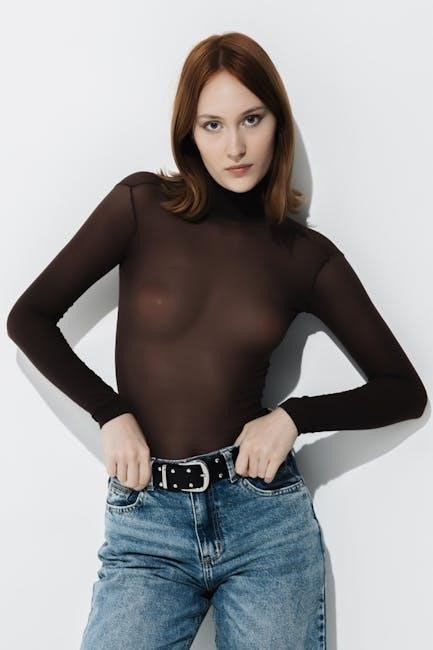
Navigating women’s belt sizes can be tricky, as they differ from standard clothing sizes; understanding these nuances ensures a comfortable and stylish fit every time.
Why Accurate Belt Sizing Matters
Proper belt sizing is crucial for both functionality and aesthetics. A correctly sized belt securely holds up your garments – pants, skirts, dresses – preventing unwanted slippage and ensuring a polished look.
An ill-fitting belt can be uncomfortable, digging into your waist or feeling loose and insecure. Beyond comfort, the right size enhances your silhouette, defining your waist and completing your outfit.
Choosing the correct size also protects your clothing; a belt that’s too tight can stretch or damage fabric, while a loose belt offers no support. Investing time in accurate measurement prevents frustration and ensures a long-lasting, flattering fit.
The Difference Between Belt Sizes and Waist Sizes
Belt sizes and waist sizes are not interchangeable measurements. Your waist size represents the circumference of your natural waistline, typically found just above your belly button. Belt size, however, refers to the length of the belt itself, not where it sits on your body.
Generally, belt sizes are measured in inches and are typically 2-4 inches larger than your actual waist measurement. This allowance ensures a comfortable fit with room for adjustment. For example, if your waist measures 30 inches, you’ll likely need a belt size of 32 or 34 inches.
Understanding this distinction is vital for online shopping or when purchasing belts without trying them on, preventing the common mistake of ordering a belt in your waist size.

Measuring for a Women’s Belt
Accurate measurement is key to finding the perfect fit! Use a flexible measuring tape and measure your natural waistline, or an existing belt.

How to Accurately Measure Your Waist
To get the most accurate measurement, stand naturally and relax your abdomen. Don’t suck in your stomach or pull the measuring tape too tight. Wrap the measuring tape around your natural waistline – this is typically the narrowest part of your torso, or where you naturally bend when side to side.
Ensure the tape measure is level all the way around your body. Read the measurement in inches or centimeters, depending on your preference. It’s helpful to have a friend assist you to ensure accuracy. Record this measurement; it will be crucial when selecting the correct belt size. Remember, this isn’t your pants size, but your actual waist circumference!
Measuring an Existing Belt for Size Reference
If you have a belt that fits you well, you can use it as a guide for finding your size. Lay the belt flat on a surface and measure from the point where the buckle attaches to the belt, to the hole you typically use. Don’t include the buckle itself in the measurement.
This measurement corresponds to your waist size. If the measurement falls between sizes, it’s generally recommended to size up. Note that belt sizes can vary slightly between brands, so this is a good starting point, but not a definitive rule. Consider the belt’s material; some stretch more than others, influencing the ideal fit. This method provides a practical reference point.
Standard Women’s Belt Sizes
Women’s belts commonly range from 24 to 44 inches, or sizes Small to Extra Large, though variations exist; knowing both systems aids in selection.
Numerical Belt Sizes (e.g., 28, 30, 32)
Numerical belt sizes represent the measurement in inches of the belt itself, not your waist. This is a crucial distinction to remember when shopping. Typically, these sizes increment in two-inch intervals – 26, 28, 30, 32, and so on, up to larger sizes. To determine your numerical belt size, measure your waist at the point where you intend to wear the belt.
However, don’t simply use your waist measurement! It’s generally recommended to add 2-4 inches to your waist size to find the appropriate belt size. This allowance ensures a comfortable fit and prevents the belt from being too tight. For example, if your waist measures 30 inches, a belt size of 32 or 34 inches would likely be ideal. Always check the specific brand’s size chart, as variations can occur.
Letter Belt Sizes (S, M, L, XL) ౼ Conversion Chart
Many retailers offer belts in standard letter sizes – Small (S), Medium (M), Large (L), and Extra-Large (XL) – providing a more generalized fit. However, these sizes aren’t universally standardized, meaning a size Medium from one brand might fit differently than a Medium from another. A general conversion chart can be helpful as a starting point:
- Small (S): Typically corresponds to waist sizes 26-28 inches and belt sizes 28-30 inches.
- Medium (M): Usually fits waist sizes 29-31 inches, translating to belt sizes 32-34 inches.
- Large (L): Generally suits waist sizes 32-34 inches, aligning with belt sizes 36-38 inches.
- Extra-Large (XL): Often fits waist sizes 35-37 inches, corresponding to belt sizes 40-42 inches.
Always prioritize checking the brand’s specific size chart for the most accurate fit, as these letter sizes are approximations.
Belt Size Charts by Brand
Brand sizing varies significantly; consulting specific charts is crucial for an accurate fit, as measurements aren’t standardized across all manufacturers.
Common Brand Size Variations
Navigating brand-specific sizing is essential when purchasing women’s belts. Many brands, even those seemingly similar in style, employ unique sizing systems. For instance, a size medium in one brand might equate to a small or large in another. This inconsistency stems from differing interpretations of waist measurements and belt length calculations.
Some brands prioritize numerical sizing (e.g., 28, 30, 32 inches), while others favor letter sizing (S, M, L, XL). Even within numerical sizing, the actual waist measurement corresponding to a specific number can fluctuate. It’s not uncommon to find a size 30 belt fitting differently depending on the manufacturer. Therefore, relying solely on your usual size is risky.
Always consult the brand’s individual size chart before making a purchase. These charts typically provide detailed waist-to-belt size conversions, ensuring a more accurate fit. Paying attention to these variations will save you the hassle of returns and exchanges, ultimately leading to a more satisfying shopping experience.
Finding Specific Brand Size Guides Online
Locating a brand’s specific size guide is crucial for accurate belt selection. Most brands prominently feature these guides on their official websites, often within the product description or a dedicated “Size Guide” section. Begin your search directly on the brand’s website; a quick Google search like “[Brand Name] size guide” usually yields immediate results.
Retailers also frequently provide size charts, though these may be generalized. However, some retailers link directly to the brand’s official guide, offering the most precise information. Look for a “Fit Guide” or “Size Chart” link on the product page.
Pay close attention to instructions on how to measure, as brands may differ in their recommended measurement points. Screenshots or saved links to size guides are helpful for comparison shopping. Utilizing these resources minimizes guesswork and increases the likelihood of a perfectly fitting belt.

Understanding Belt Width and Material
Belt width impacts fit and style, while material affects stretch and durability; consider these factors alongside size for optimal comfort and a flattering silhouette.
How Belt Width Affects Size and Fit
Belt width significantly influences how a belt sits on your waist and the overall look it creates. Wider belts, typically 1.5 inches or more, make a bolder statement and are excellent for defining the waist when worn over dresses or looser tops. However, they can sometimes feel restrictive if you’re between sizes.
Narrower belts, around 1 inch or less, are more subtle and versatile, pairing well with jeans, skirts, and fitted clothing. They offer a more delicate appearance and generally provide a more comfortable fit. The width of your belt should also complement your body type; wider belts can balance broader hips, while narrower belts suit smaller frames.
Consider the loops on your pants or skirt – the belt width should ideally correspond to the loop size for a clean look. A belt that’s too wide won’t thread through, and one that’s too narrow can look disproportionate.
Material Considerations and Stretch
The material of a women’s belt greatly impacts its fit and how you determine the correct size. Leather belts, known for their durability, generally offer minimal stretch. Therefore, accurate measurement is crucial – avoid sizing down, as leather won’t conform significantly over time. Genuine leather often feels more secure.
Elastic or stretch belts, conversely, provide more flexibility. These are ideal if you prefer a comfortable fit or experience fluctuations in your waist size. When measuring for stretch belts, you can sometimes opt for a slightly smaller size, as the material will expand. However, be mindful of the stretch limit to avoid overstretching.
Synthetic materials like polyurethane (PU) leather offer a middle ground, providing some stretch and a more affordable price point. Always check the product description for specific stretch properties.

Troubleshooting Belt Fit Issues
Addressing fit problems is common; a too-tight belt can be punched with additional holes, while a loose belt may require a belt keeper or replacement.
Belt Too Tight: What to Do
If your belt feels uncomfortably snug, don’t immediately assume it’s the wrong size. Several adjustments can be made before considering a return or exchange. First, ensure you’re buckling the belt correctly – sometimes a simple readjustment can provide needed slack. If that doesn’t work, consider adding a new hole to the belt.
A leather punch tool is ideal for this, creating a clean, professional-looking hole. If you don’t own one, a nail and hammer can work in a pinch, but be cautious to avoid damaging the leather. Alternatively, if the belt has minimal stretch, wearing it a few times might slightly loosen it. However, consistently forcing a too-tight belt can damage both the belt and your clothing, so prioritize finding a comfortable fit.
Belt Too Loose: Solutions
A belt that doesn’t stay put is frustrating! If your belt is too loose, several solutions can help achieve a secure fit. The most straightforward is to tighten the belt to the next available hole. If none are snug enough, consider adding additional holes – a leather punch is recommended for a clean finish.
For belts with limited adjustability, a belt extender can add extra length. Alternatively, explore belt loops on your pants; if they’re too loose, a tailor can tighten them for a better fit. If the belt is significantly too large, it might be best to exchange it for a smaller size. Remember, a properly fitted belt enhances your outfit and provides comfortable support.
Converting Between Different Belt Size Systems
Belt sizes vary internationally; understanding US to European conversions, and waist-to-belt size charts, is crucial for accurate online purchases and perfect fit.
US to European Belt Size Conversion

Converting between US and European belt sizes requires a simple understanding of the differences in measurement systems. Generally, European belt sizes are expressed in centimeters, while US sizes are in inches. A direct conversion isn’t always perfect due to brand variations, but a good rule of thumb is to add approximately 4 inches to your US waist size to find the equivalent European size.
For example, a US size 28-inch waist typically corresponds to a European size 92cm. Similarly, a US size 30-inch waist often translates to a European size 96cm. It’s always best to consult the specific brand’s size chart, as discrepancies can occur. When in doubt, it’s safer to size up, as belts can always be adjusted to a smaller size, but cannot be stretched significantly.
Waist Size to Belt Size Conversion Table
Determining the correct belt size based on your waist measurement is crucial for a comfortable fit. Unlike clothing sizes, belt sizes typically correspond to the measurement at which the belt will be worn, not your natural waist; Here’s a general conversion table to guide you:
| Waist Size (inches) | Belt Size (inches) |
|---|---|
| 25-26 | 28-30 |
| 27-28 | 30-32 |
| 29-30 | 32-34 |
| 31-32 | 34-36 |
| 33-34 | 36-38 |
| 35-36 | 38-40 |
Remember this is a general guide; always check the specific brand’s size chart for the most accurate fit. Adding 2-4 inches to your waist size is a common practice, but material and desired fit influence the ideal belt size.

Where to Find Reliable Belt Size Information
For precise sizing, consult official brand websites and retailer size guides; these resources offer detailed charts and specific instructions for accurate measurements.
Official Brand Websites
Directly visiting a brand’s official website is often the most reliable method for finding accurate belt sizing information. Many brands provide dedicated size guides specifically tailored to their products, accounting for unique fits and materials. These guides frequently include detailed measurement instructions, conversion charts, and even visual aids to help you determine the correct size.
Look for a “Size Guide” or “Fit Guide” link, typically found on the product page or within the website’s help section. Some brands offer interactive tools where you can input your waist measurement and receive a recommended belt size. Remember that sizing can vary between brands, so always prioritize the specific guide provided by the manufacturer. Utilizing these resources minimizes the risk of ordering an ill-fitting belt and ensures a comfortable, stylish experience.
Retailer Size Guides
Many retailers that carry women’s belts offer their own size guides to assist customers in finding the perfect fit. These guides often consolidate sizing information from various brands they stock, providing a convenient reference point. However, it’s crucial to remember that retailer size guides are generalizations and may not always be perfectly accurate for every brand or style.
Always cross-reference the retailer’s guide with the specific size chart provided by the belt’s manufacturer whenever possible. Look for detailed measurement instructions and conversion tables. Retailer websites frequently feature customer reviews, which can offer valuable insights into the fit of particular belts. Prioritize checking both the retailer’s and brand’s guidance for the most reliable sizing information, ensuring a confident purchase.